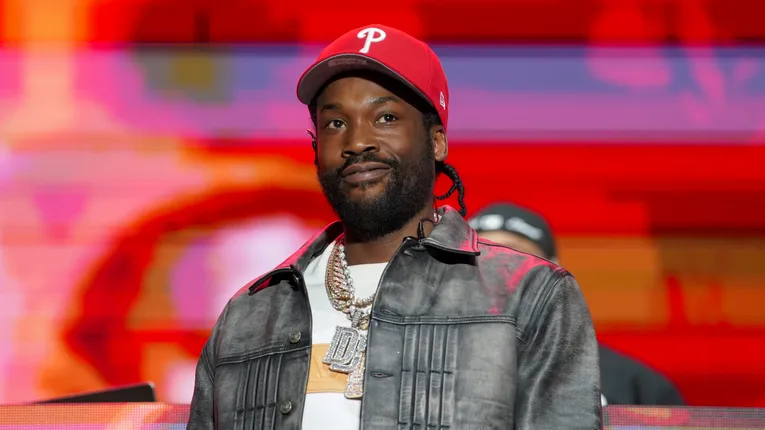


When news broke about the death of Celeste Rivas Hernandez, Meek Mill responded in a way that immediately drew backlash. Instead of reading the moment, he posted, “I need his promo for my album rollout… Who do I call?” It highlights the double edged nature of his unfiltered personality. The same raw honesty that has defined him as one of Philadelphia’s most genuine voices is also what continues to hurt him online. His reaction to the D4vd situation is a clear example of why that reputation continues to follow him, especially in the kind of online spaces where that behavior gets amplified.
This goes beyond just another controversial tweet. It reinforces the larger perception that Meek has struggled to shake for years. It also gives weight to recent criticism from Charlamagne Tha God, who argued that Meek never fully moved past the “Twitter fingers” narrative that Drake pushed during their feud with “Back To Back.” Still, that moment alone did not permanently define him. Fans showed understanding at the time, especially with the context of his personal struggles. The issue is that over time, his consistent behavior online has kept that perception alive. Social media has repeatedly worked against him more than anything else.
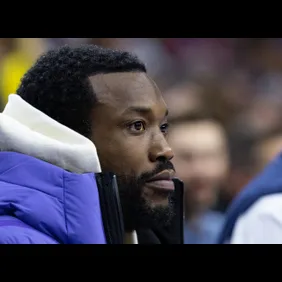
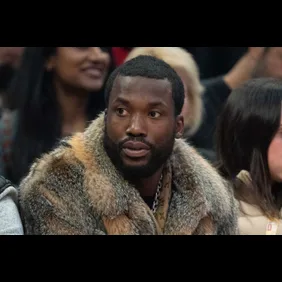
Dec 13, 2022; Philadelphia, Pennsylvania, USA; Recording artist Meek Mill looks on during the fourth quarter of a game between the Philadelphia 76ers and the Sacramento Kings at Wells Fargo Center. Mandatory Credit: Bill Streicher-USA TODAY Sports
The tweet tied to D4vd only adds to that pattern. With conspiracy theories already spreading online following the discovery of Celeste’s body, someone with Meek’s influence carries a different level of responsibility. His tendency to post impulsively often leaves even his strongest supporters uncomfortable, watching situations unfold in real time with second hand embarrassment.
Meek has only leaned deeper into this online persona, which makes Charlamagne’s critique feel more grounded. The Breakfast Club host suggested that Meek never truly recovered from that era, and Meek’s response seemed to prove the point. Instead of addressing it directly, he went on a long, scattered rant filled with deflection and conspiracy claims.
In that response, Meek called on his followers to support what he framed as a larger effort working against him, even suggesting that Charlamagne was part of it. The argument quickly veered into problematic territory, further complicating how his message was received.
The conversation also ties into his associations. Discussions around Sean 'Diddy' Combs have highlighted broader concerns about power dynamics in the industry. While there is no claim that Meek was directly exploited, their connection has raised questions. His proximity to influential figures has always been a double edged sword. His relationship with Jay-Z helped fuel the #FreeMeek movement and led to the creation of the REFORM Alliance, but it also placed him in circles that include figures like Jared Kushner. In many cases, working across different spaces is necessary, especially when dealing with policy and reform, but it also adds layers to how he is perceived.
That is what makes his online behavior stand out even more. Being connected to high level figures like Michael Rubin or Robert Kraft while tweeting impulsively creates a disconnect. He can be present in elite spaces, like Rubin’s Fourth of July events, yet still sound like an artist searching for footing. His attempts to pivot into more structured business moves, like discussing networking on LinkedIn or crowdsourcing album funding, suggest he is still figuring out his next phase after leaving the major label system.
That tension sits at the center of his public image. He wants to be seen as a voice for the streets while also moving within powerful circles. That contrast is not new in hip hop. Artists like Jay-Z or Kanye West have navigated similar dualities, but they have approached it with a clearer sense of control. Meek’s version often feels less defined. He is close to power but still communicates like someone fighting to be heard, which creates confusion around his identity.
Ultimately, that is the core issue. Like many artists in today’s landscape, Meek’s online presence sometimes overshadows his music. His talent has never been in question, but the way he engages online often works against him. This became especially clear when his connection to Diddy came under scrutiny following a lawsuit that referenced “a Philadelphia rapper who dated Nicki Minaj.” His attempts to shut down those rumors only added fuel to the conversation.
February 20, 2022; Cleveland, Ohio, USA; American rapper Meek Mill during the first quarter in the 2022 NBA All-Star Game at Rocket Mortgage FieldHouse. Mandatory Credit: Kyle Terada-USA TODAY Sports
“When I got a girl around me I’m f#%king her twice a day lol ask some of ya favorites … pussy don’t control me but it’s like a high… one love to the gay people but that juicy p#%sy do it for meeeeee I done ran red lights to get that feeling yall weird on here like devils lol,” he tweeted.
That moment quickly turned into viral content, even becoming part of a comedy bit from Andrew Schulz, which Meek himself laughed at. Still, the way he handled it only made things worse. By September 2025, he was offering six figures to investigate the rumors. Whether or not there is any larger effort against him, his own reactions often keep the cycle going. Each denial becomes content, and that cycle keeps feeding itself.
That is the reality of the internet. It rarely forgets, and Meek’s relationship with it remains complicated. When he drops music, he reminds people of his skill and impact. At the same time, his online behavior continues to shape the narrative around him. Recently, he suggested there was a coordinated effort to damage his reputation after going independent, pointing to issues like streaming audits.
“They Let these companies put campaigns on me over money while I got reform uplifting my people .... I did that because it was real not for a image or for money ... it kinda killed my spirit from being around that stuff! All my shit sold out they tried me tho!” He wrote.
Outside of his own statements, there has been little evidence to support those claims. In many cases, his own posts do more to reinforce the perception than anything else. His presence online often feels scattered compared to the focus he shows in his music. Those flashes of clarity are still there, but they appear less often. In trying to follow paths similar to figures like Jay-Z, Rick Ross, or Michael Rubin, Meek has found himself in an uncertain space. The difference is that those figures have maintained a level of discipline online that he has not.
Meek is not being undone by a single scandal or failure. Instead, he has been shaping his own public image in real time, one post at a time, and leaving it there for the world to revisit.